Event summary
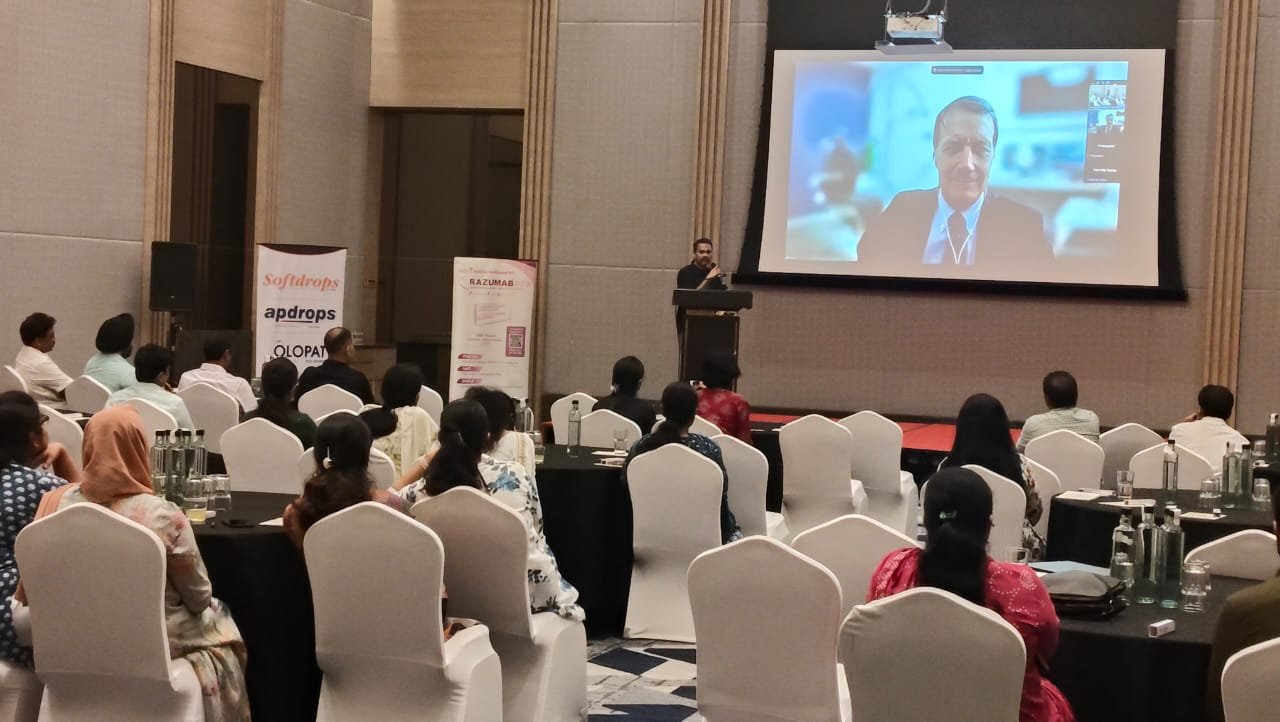
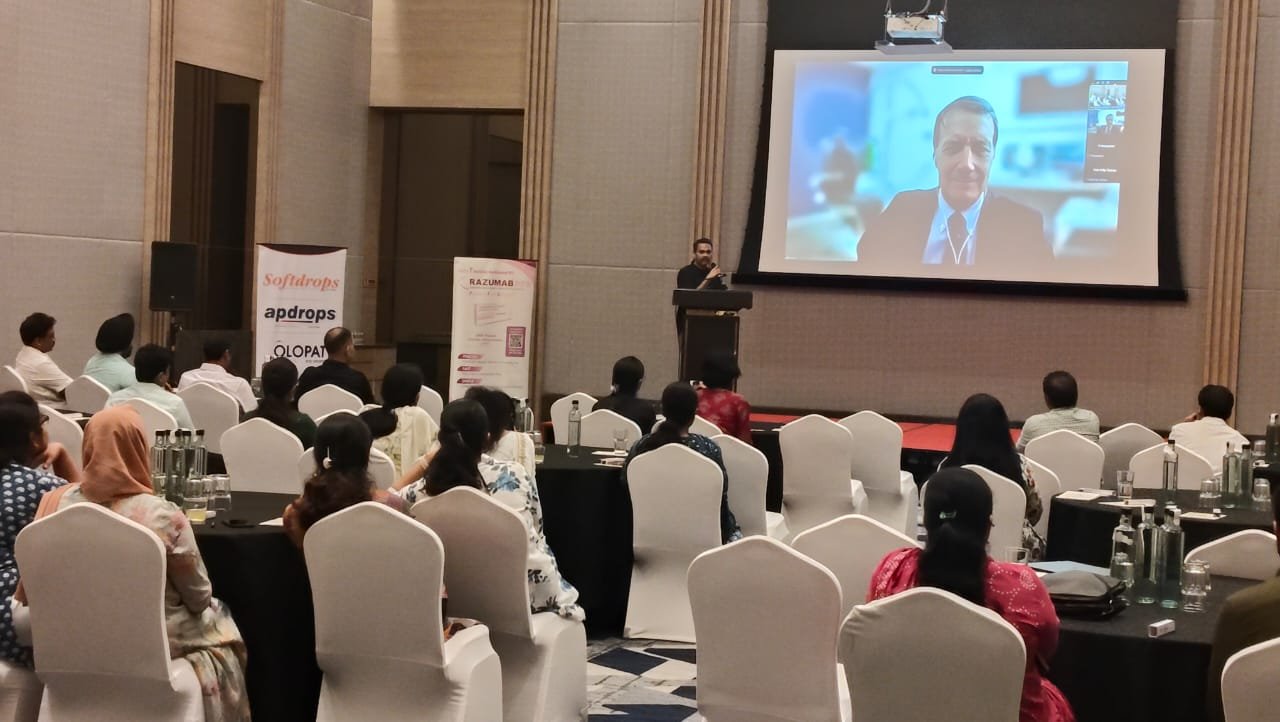
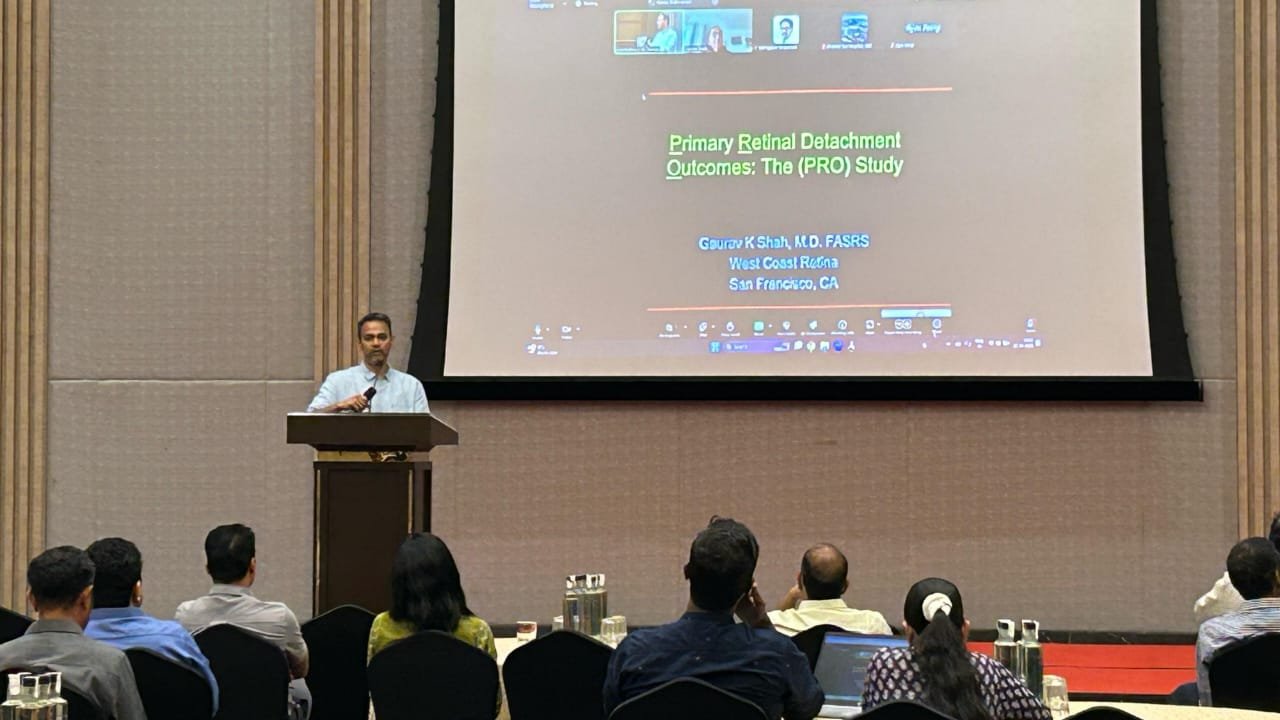
The July 2025 Retina Meet featured an evidence-driven lecture by an international guest (Dr. Michael Stewart) focusing on anti-VEGF pharmacology, comparative outcomes and practical treatment selection. Local faculty presented advanced surgical techniques and case series addressing peripheral micro-PVD induction for TRD repair, macular traction relieving vitrectomy in diabetic TRD, acute idiopathic blind-spot enlargement, consequential ERM after anti-VEGF therapy, and SRH management in vein occlusions. The meeting blended pharmacology, surgery and outcome-based discussions — making it relevant to both medical and surgical retina practice. Panelists emphasised personalised treatment algorithms, use of intraoperative OCT and adoption of minimally invasive yet safe approaches in complex cases.
Programme highlights:
Guest Lecture: “The science behind our anti-VEGF choices” — Dr. Michael Stewart, M.D. (Mayo Clinic)
Surgical technique talks: peripheral micro-PVDs in TRD (Dr. Srishti Ramamurthy), macular traction relief (Dr. Kshitij Donimath)
Diagnostic session: AIBSE (Dr. Akash R Suslade)
Complication session: ERM after anti-VEGF (Dr. Kalaivani J) and SRH with vein occlusions (Dr. Sudan R)
Closing: Vote of Thanks by Dr. V.R. Saravanan
Key takeaways
Anti-VEGF choice should consider pharmacokinetics, durability, patient lifestyle and cost.
Peripheral micro-PVD techniques can reduce iatrogenic breaks and improve TRD outcomes.
Recognise AIBSE early — OCT and visual fields are diagnostic.
Monitor long-term ERM risk after multiple intravitreal injections; consider timely surgical review.
SRH management requires multimodal imaging and early, tailored intervention for best outcomes.